
Key takeaway
Choose an architecture based on data sensitivity, latency, transfer cost, access and whether analytics should use a copy or run in place.
Choose a collection and processing model
Cloud analytics collects, stores, transforms and analyzes data in cloud services; an organization can use a cloud or hybrid environment. ETL transforms data before loading, while ELT loads first and transforms it in the destination. Change data capture (CDC) transfers information about inserted, updated and deleted records and can reduce delay between a source and analytics. Document source schemas, refresh frequency and replay behavior.
Decide whether to move data or analyze it in place
Hybrid analytics can keep some data on premises or in a private environment while sending it to cloud dashboards through a secure connector. Federated analytics queries separate sources and combines results, which may reduce the need to copy data into a central store. This does not automatically satisfy privacy or regulatory requirements: check which identity runs each query, which columns it can see, where results are stored and how exports are limited.
Set access for each source and connector
An analytics tool may connect to several databases, CRM or ERP systems, IoT streams and log stores. Create a service identity for each connector, grant only required read and write permissions, keep credentials in a secret store and track rotation. Apply role-based user access, restrictions for sensitive fields and auditing; ensure a shared dashboard does not bypass source permissions.
Track quality, observability and cost together
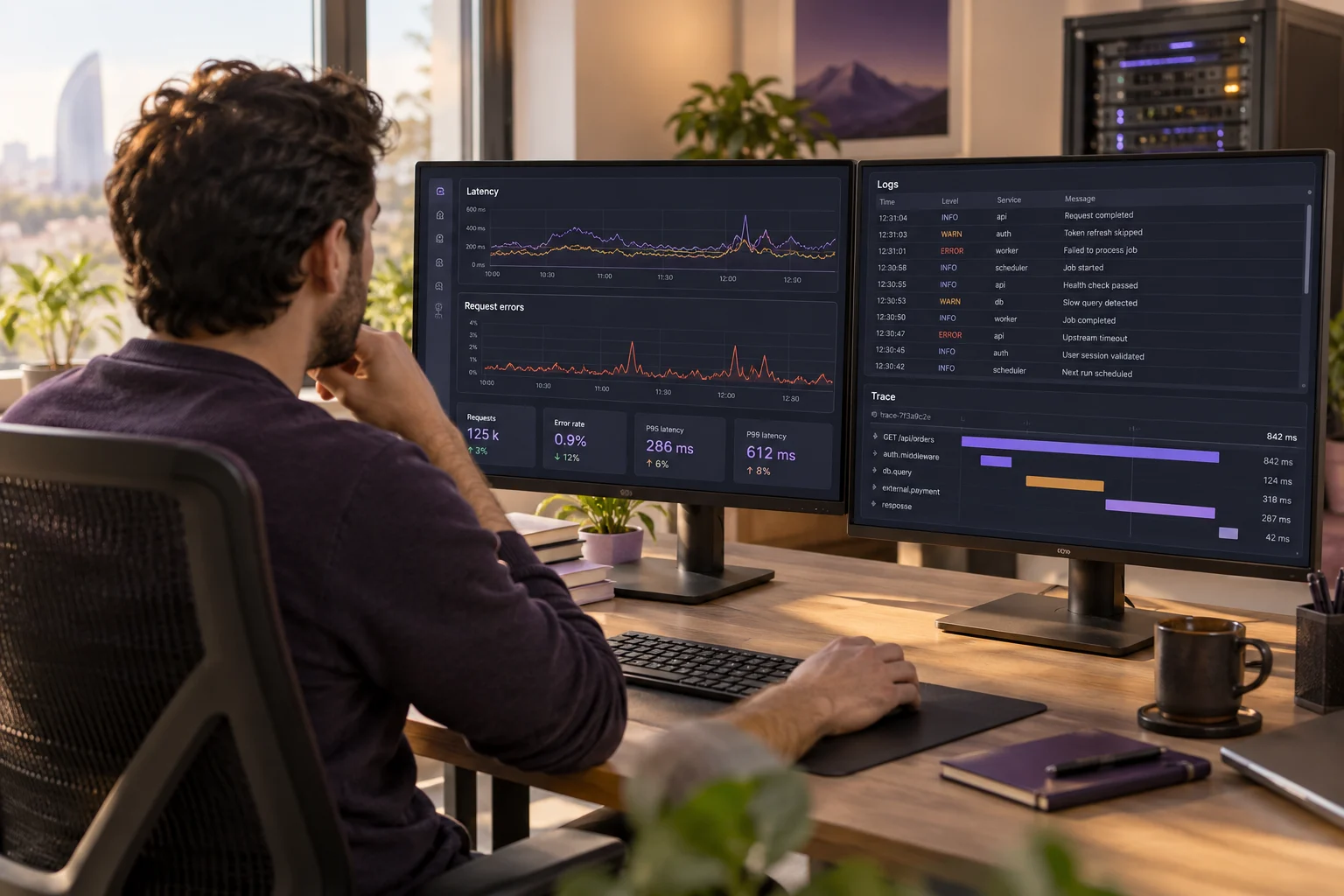
Check completeness, duplication, schema changes and refresh time, and measure delay from source to dashboard. Combining logs, traces and metrics with event streams helps SOC and operations teams correlate alerts with service behavior. Review retention, query and egress budgets, resource sizing and unused feeds; set limits and alerts based on actual usage.