
Key takeaway
When collecting data, define its owner, purpose, sensitivity, quality and retention; a growing store is not automatically a governed one.
BI turns source data into decision support
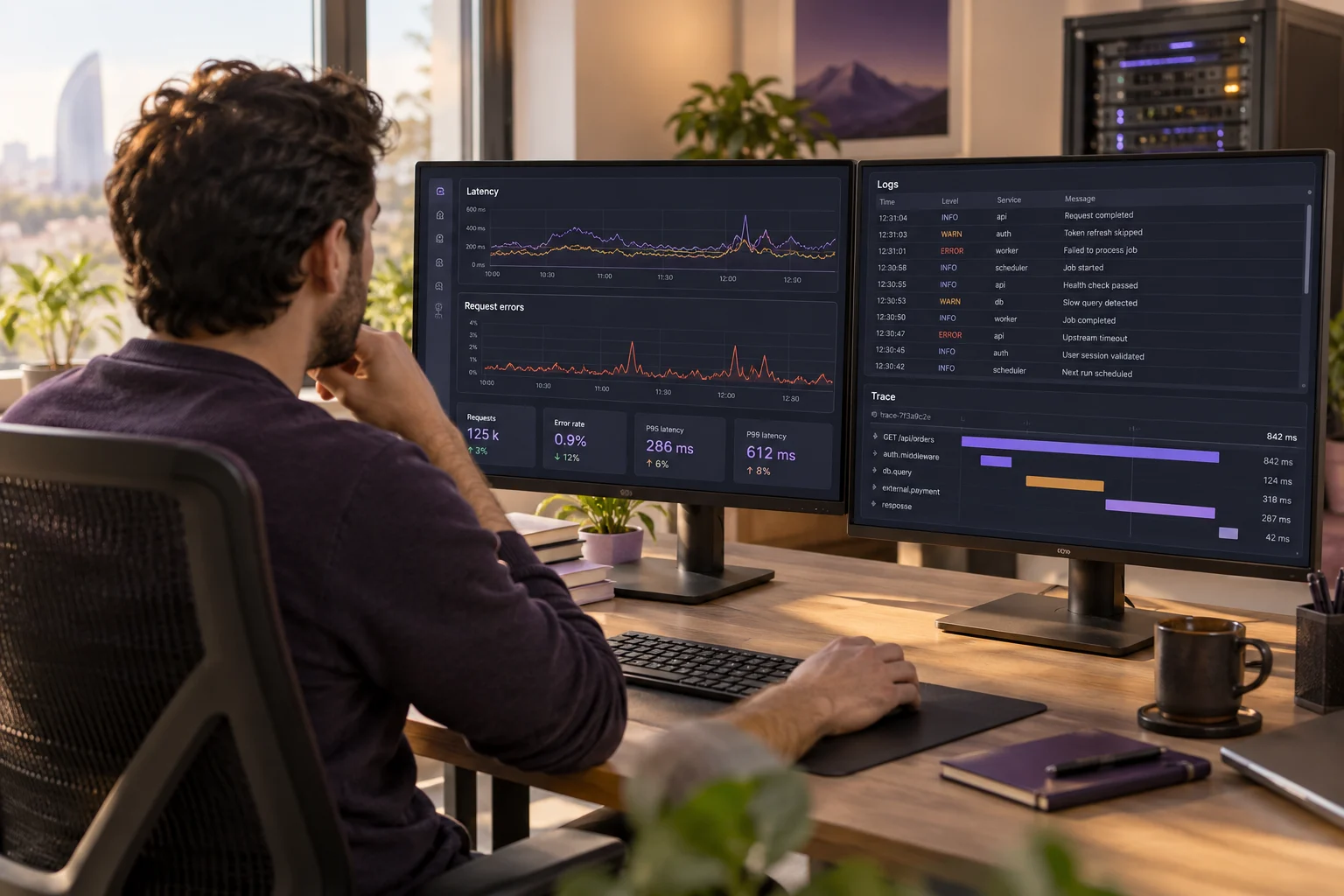
Business intelligence (BI) collects and aligns data from different systems, then presents past and current measures through queries and reports. A finance team might compare sales and returns in one dashboard; a security team might view endpoint and network events over time. A dashboard presents a measured indicator; it does not by itself prove its cause or predict what comes next. Those questions require analysis, reliable measurement and context.
Collect
Bring in data needed for the question from CRM, ERP, applications and telemetry.
Integrate
Standardize fields and identify duplicates and missing values.
Analyze and decide
Match the query and chart to the question, then make the decision with the accountable team.
Data lakes and warehouses serve different needs
A data lake stores different formats in raw or lightly processed form, often applying a schema when data is read. This supports exploration and model development, but can make source, ownership and contents harder to track. A data warehouse typically stores cleaned, structured data for defined reporting, applying a schema before loading. An organization can use both: a lake retains broad source data while a warehouse serves selected measures for reports.
| Feature | Data lake | Data warehouse |
|---|---|---|
| Data | Raw, varied formats | Cleaned and structured |
| Schema | Applied when read | Defined before loading |
| Typical use | Exploration, data science, flexible analysis | BI reports and consistent measures |
Track data from source through use
A typical lake flow ingests data in batches or streams, stores it in raw, curated and trusted zones, transforms it when needed, then serves analytics, BI or models. Record transformations, ownership and access at each stage. Adding sources without validation can produce conflicting measures, missing values or incorrect labels. Before treating an indicator as reliable, check its source, refresh time and transformation history.
Ingestion
Record the source, time and data owner.
Processing
Make cleaning, normalization and transformations traceable.
Consumption
Dashboards, analysts and models should access approved sources and required fields only.
Protect the data store itself
A lake that aggregates information from many systems becomes a valuable target: compromising it may expose sensitive data from multiple sources. Classify data on ingestion, grant users and services only the fields and actions they need, and encrypt data in transit and at rest. Log permission changes, unusual reads and exports, and new source connections. Without an owner, retention period and deletion rule, a lake can become an unmanaged data swamp. Check the integrity of incoming security telemetry at its source.
Access and privacy
Set role and attribute-based access, classification and an appropriate retention period.
Monitoring
Monitor unusual queries, exports and changes in the store itself.
Data quality
Record source ownership, format, refresh time and transformation history.